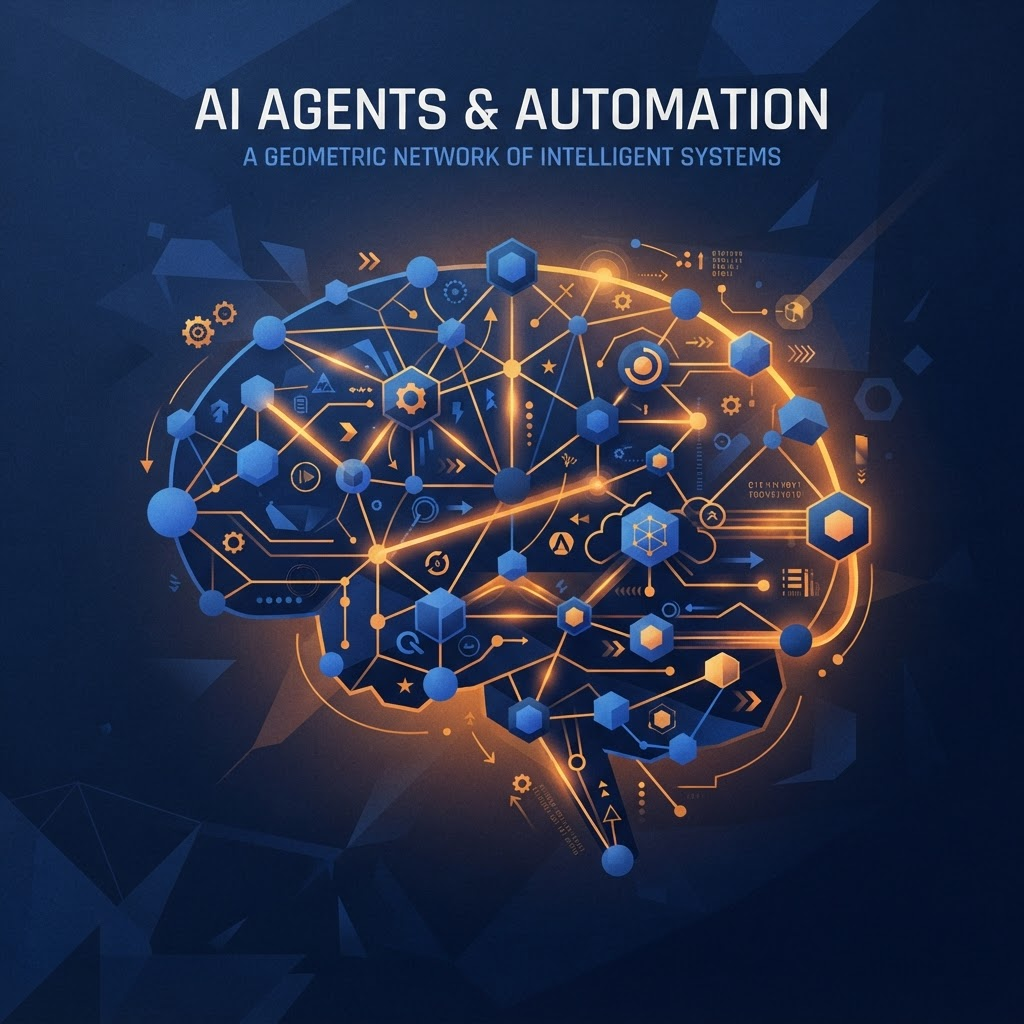
Every few months, a new framework promises to be the definitive way to build AI agents, and every few months, teams that adopted the previous 'definitive' framework quietly migrate away from it. After shipping several production agent systems over the past two years — a customer support agent handling thousands of conversations a month, an internal finance automation tool, and a research assistant for a content team — the frameworks that have stayed genuinely useful are LangChain for the building blocks and LangGraph for orchestration. Not because they are the newest, but because they solved the boring, unglamorous problems that actually determine whether an agent survives contact with real users.
The first boring problem is state management. A chatbot demo that answers one question well is trivial. An agent that needs to remember what happened three turns ago, retry a failed tool call without losing context, and hand off to a human when it is uncertain requires an explicit state machine, not a clever prompt. LangGraph models agents as graphs of nodes and edges with typed state passed between them, which sounds abstract until you have debugged a production incident at 11pm and been grateful that you can see exactly which node the agent was in when it made a bad decision, instead of reverse-engineering the failure from a wall of unstructured log text.
The second boring problem is tool calling that actually works under real-world conditions. Every framework can call a function when the API returns a clean response. Production tool calling means handling a third-party API that times out, a database query that returns zero rows when the agent expected one, and a tool that partially succeeds. LangChain's tool abstraction, combined with LangGraph's ability to route on error states, makes it straightforward to build retry logic, fallback tools, and human-in-the-loop checkpoints for anything sensitive enough to warrant one — a refund, a database write, an email sent on the client's behalf.
The third problem, and the one most agent tutorials skip entirely, is observability. When an autonomous agent makes a bad decision in production, 'the model hallucinated' is not an acceptable postmortem. You need to see the exact sequence of tool calls, the retrieved context, the intermediate reasoning, and the final output, ideally in a trace you can share with a non-technical stakeholder. Integrating LangSmith or an equivalent tracing setup from the first commit, not after the first incident, has consistently been the difference between an agent system a team trusts and one they quietly stop using.
None of this means LangChain and LangGraph are the right choice for everything. A simple, single-turn Q&A feature over a small document set is often better served by a direct call to a model with retrieval baked in, using something lighter like the Vercel AI SDK, without the overhead of a graph-based orchestration layer. The decision point is complexity: how many steps does the task genuinely require, how many of those steps can fail independently, and how much does a wrong answer cost. Below a certain complexity threshold, LangGraph is scaffolding you do not need yet.
Above that threshold — multi-step workflows, tool calling against real internal systems, or any agent that needs to run unattended for more than a few seconds — the ecosystem around LangChain and LangGraph, including its integrations with vector databases, its growing library of pre-built tools, and its maturing observability tooling, still outweighs the appeal of a newer, less proven framework. Production reliability is rarely won by the framework with the best demo video. It is won by the framework whose failure modes you already understand, because you have already hit most of them and fixed them in code that is now boringly, reliably stable.